This page sets out the technical specification of 275 Galvanized Spiral Duct With 15mm Insulation Layer, Inner‑outer Double‑layer Galvanized Ventilation Pipe as supplied by GUANDE, together with the selection rules that determine which variant suits a given project. It is written for specifiers, estimators and contractors who need to confirm a size, a material build-up and a connection method without waiting on a quotation.
| Item | Specification |
|---|---|
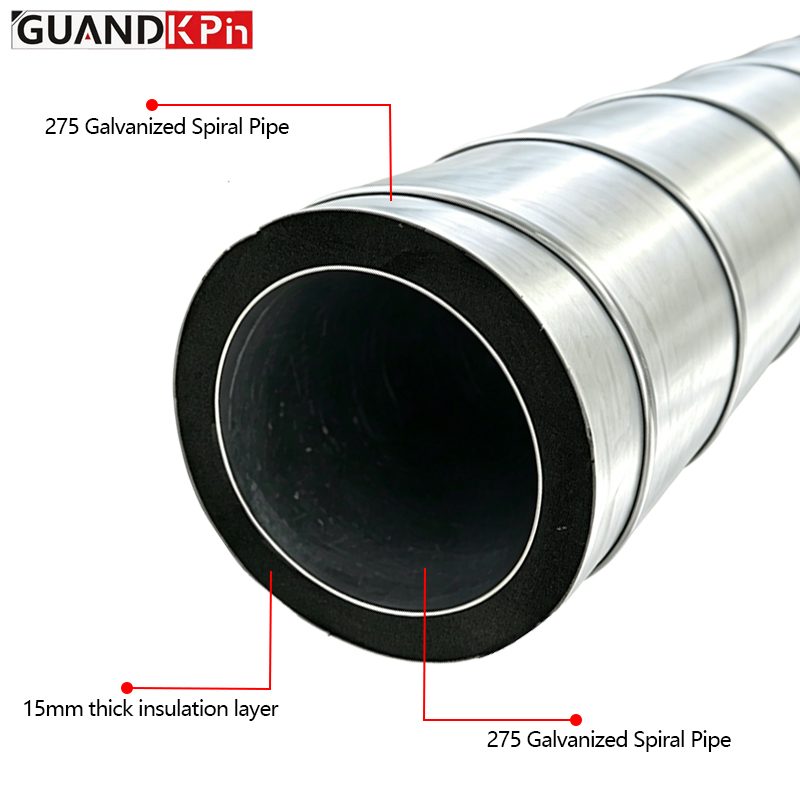
| Description | Multiple diameters available; customized length; insulation thickness:15mm |
| Material / Construction | Inner & outer layer: 275 galvanized steel sheet; Middle layer: thermal insulation foam |
A double-layer galvanised spiral duct with a 15 mm insulation layer between the inner and outer skins. The double-wall construction gives the round duct a clean factory-finished insulated appearance while improving both thermal and acoustic performance. The inner and outer layers are 275 galvanised steel sheet with insulation foam between them.
Noise in a residential ventilation system has two distinct sources: fan-generated noise travelling along the duct, and regenerated noise created by turbulence at bends, transitions and terminals. The first is controlled with attenuation and with flexible connections at the plant. The second is controlled purely by geometry — gentle bends, gradual transitions, generous terminal sizes and avoiding abrupt changes in cross-section. Specifiers who treat noise as a terminal problem usually end up with a system that is quiet at the diffuser but audible in the bedroom above it.
A duct system that leaks 15% of its air is not 15% less effective — it is a system that no longer delivers its design intent and cannot be balanced. Leakage at joints shows up as terminals that cannot reach their design flow no matter how the dampers are set, and as extract points that fail to clear moisture from wet rooms. Because the defect is inside a sealed void, it is usually discovered only when the building is occupied. Push-fit systems with correctly seated seals achieve far better air-tightness than taped joints, and the difference is measurable at commissioning.
The three material families used in ventilation ducting each have a clear best-fit application. HDPE is flexible, chemically inert, tolerant of movement and ideal for long concealed runs where the route is not straight. PVC is rigid, dimensionally stable and well suited to compact flat-duct runs in shallow floor or ceiling build-ups. Galvanised steel is the default for larger commercial systems where mechanical strength and fire performance govern the specification. Specifying across these families on one project is entirely practical provided the transitions are made with proper adapters rather than improvised.
Quality inspection at GUANDE is not a final gate — it runs through the whole process. Incoming raw material is checked against specification before it enters production. In-process checks monitor dimensions and surface finish at defined intervals during the run. Finished 275 Galvanized Spiral Duct With 15mm Insulation Layer, Inner‑outer Double‑layer Galvanized Ventilation Pipe are inspected against the approved sample, and a batch record is kept against every shipment so that any issue can be traced back to its production parameters.
Our plant runs scheduled production for 275 Galvanized Spiral Duct With 15mm Insulation Layer, Inner‑outer Double‑layer Galvanized Ventilation Pipe with typical lead times of 15 to 25 days for standard items and 25 to 40 days for custom tooling projects. We load mixed containers directly at the factory, which lets us combine several product lines from your ventilation schedule into one shipment and reduce freight cost per unit. Confirmed lead times are stated on the order acknowledgement, not estimated at enquiry.
Use the following rules when converting a project drawing into an order. They reflect how the product performs in ceiling voids, service risers, floor build-ups and wall chases, where the practical limits are usually set by air-tightness, pressure drop and acoustic performance rather than by the headline dimension.
Size the run from the design air flow and the acceptable pressure drop, not from the fan spigot. Undersizing a ducting run is the most common specification error and it cannot be corrected later without re-opening the ceiling.
Where the run passes through an unconditioned space, condensation risk — not mechanical strength — normally decides the specification. In those locations the insulated variant is the correct default and a bare equivalent is a false economy.
Keep one connector family for the whole run. Every change of system introduces an adapter, and every adapter is an additional leak path and pressure loss point.
Matches our galvanised stamped elbow segments and insulated galvanised spiral duct. For larger systems see the duct silencer.
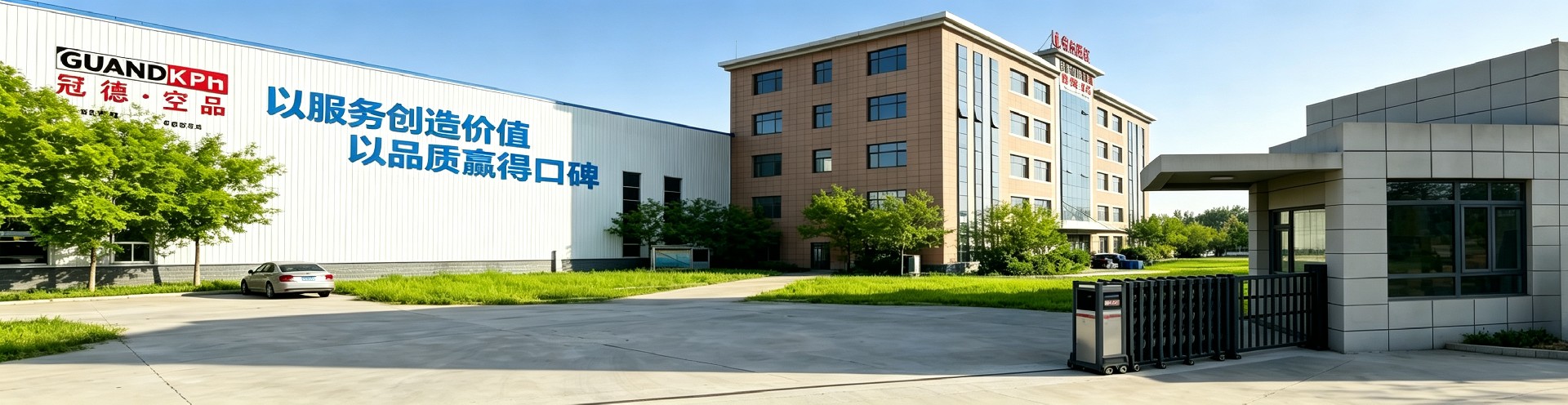
GUANDE manufactures 275 Galvanized Spiral Duct With 15mm Insulation Layer, Inner‑outer Double‑layer Galvanized Ventilation Pipe at our factory in Dezhou, Shandong, China, and ships direct to HVAC contractors, distributors and project specifiers worldwide. Wholesale, OEM and ODM programmes are welcome. Items are supplied in export cartons with the size and quantity marked on the outer label. For OEM programmes we can apply your own artwork and labelling subject to a minimum order quantity.
The products below are routinely specified alongside the item discussed in this guide. GUANDE manufactures the full range in our own plant for consolidated shipping:
Q: How thick is the insulation?
A: 15 mm, as listed in the specification table below.
Q: Are elbow segments available?
A: Yes, see our matching galvanised stamped elbow segments.
Q: Can lengths be customised?
A: Yes, duct lengths can be made to suit the project.


The southeast corner of the private entrepreneurship park in Huadian Town, Qihui County, Dezhou City, Shandong Province